
 Facebook
 X
X LinkedIn
 Forward
Jeremy Richmon, MD
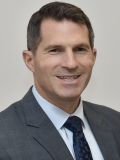
I am a fellowship-trained head and neck surgeon who specializes in head and neck cancer and microvascular reconstruction. A 2001 graduate of the University of Rochester School of Medicine, I completed my residency in otolaryngology at the University of California, San Diego, in 2007, and a clinical fellowship in head/neck oncology, microvascular reconstruction, and skull base surgery at Mass. Eye and Ear/Harvard Medical School in 2008. I joined the faculty at Johns Hopkins in 2008 and served as the Director of the Head and Neck Surgery Robotic Program until joining the Mass. Eye and Ear Head and Neck Division as an Associate Professor with the Harvard Medical School faculty in 2016.
I have extensive experience in minimally-invasive robotic techniques in the head and neck. I was the first surgeon to perform transoral robotic surgery at Johns Hopkins in 2009 and developed a robust head and neck robotic surgery program of international renown. I have collaborated with engineers and computer scientists to bring the next generation of robotics into the clinical realm and began the robotic thyroid surgery program at Johns Hopkins. I was also the first surgeon in the United States to perform transoral robotic thyroidectomy in 2016, a technique I helped develop.
Throughout my career, I have actively participated in resident and fellow education and have been responsible for the development of residency training curriculums specific to head and neck robotic surgery. I sit on the editorial advisory board for Gland Surgery as well as various national head and neck oncology and reconstructive committees. I have been an invited speaker at national and international meetings and has published more than 100 peer-reviewed papers.
My clinical interests include head and neck cancer, HPV-associated oropharyngeal cancer, robotic surgery, and microvascular reconstruction of the head and neck. My research interests include microvascular reconstructive techniques of head and neck defects, robotic surgery, and minimally invasive approaches to head and neck problems.
B. Positions and Honors
Positions and Employment
2007-2008 Fellow, Head and neck oncologic, skull base and microvascular surgery. Massachusetts Eye and Ear Infirmary, Boston, MA
2008-2014 Assistant Professor, Department of Otolaryngology – Head and Neck Surgery Division of Head and Neck Surgery, Johns Hopkins University, Baltimore, MD
2014-2016 Associate Professor, Department of Otolaryngology – Head and Neck Surgery Division of Head and Neck Surgery, Johns Hopkins University, Baltimore, MD
2016-present Associate Professor, Department of Otolaryngology – Head and Neck Surgery, Massachusetts Eye and Ear, Harvard University School of Medicine, and Atrius Health, Inc.
Other Experiences and Professional Memberships
Honors
2000 Alpha Omega Alpha
2005 First Prize San Diego Academy of Otolaryngology Resident Research Competition.
2005 Vice-President’s Resident Research Award, The Triological Society, Western Section.
2006 Shirley Baron Resident Research Award, The Triological Society, Western Section.
2007 The Kaiser Permanente Award for ‘Excellence in Teaching’ in the House Staff Category.
2010 The Johns Hopkins George T. Nager, MD Faculty Teaching Award for ‘Excellence in Teaching’
C. Contributions to Science
Director of Transoral Robotic Surgery (TORS) program at Johns Hopkins Hospital (2009-16)
-First to perform TORS at Johns Hopkins (10/2009)
-Expanded program to Johns Hopkins Bayview Hospital after training surgeons there (2011)
-Developed TORS clinical research program and post-operative care pathway
The treatment of head and neck cancer has traditionally been managed with open, invasive surgical approaches, radiation +/- chemotherapy, or a combination of modalities. However, recent technologic advances have allowed for a minimally invasive approach to tumors in the pharynx through the mouth, which heretofore were inaccessible. The primary tool in this surgical evolution was the da Vinci robot (Intuitive Surgical, Inc). When I began my career at Johns Hopkins in 2008, the robot was not being utilized for head and neck procedures and I saw this as a potential area for growth. This program was rolled out within the framework of our multi-disciplinary head and neck cancer care and became a more and more frequently utilized treatment at Hopkins over the years attracting patients locally and nationally.
I published our experience and recommendations for implementing a TORS program in a medical center in The Laryngoscope in 2011. Clinical research efforts were done in conjunction with Greater Baltimore Medical Center and radiation oncology and we became the third highest accruing site in the country for the ECOG 3311 trial evaluating radiation de-intensification following transoral surgery. In 2014, I published our institutional practice of post-operative care with rapid discharge after TORS on post-operative day one, demonstrating that it is safe, feasible, and not associated with post-operative complications.
- Richmon JD, Agrawal N, Pattani KM. Implementation of a TORS program in an academic medical center. Laryngoscope. 2011 Nov;121(11):2344-8.
- Richmon JD, Feng AL, Yang W, Starmer H, Quon H, Gourin CG, Feasibility of Rapid Discharge after Transoral Robotic Surgery (TORS) of the Oropharynx. Laryngoscope. 2014 Nov;124(11):2518-25.
Director of robotic thyroid surgery program at Johns Hopkins
-First to perform robotic thyroidectomy at Johns Hopkins (2010)
-First to perform transoral robotic thyroidectomy in the United States (4/22/2016)
The other major area of robotic surgery in the head and neck is thyroidectomy. Robotic thyroidectomy is performed to avoid a visible cervical scar, which can have a significant impact on quality of life for the primarily young, female thyroid population. Although having performed the procedure initially transaxillary, we adopted the retroauricular approach shortly thereafter. In an attempt to develop a truly scarless approach to the thyroid, we described a transoral robotic approach in a cadaver model. My initial case series on live patients was presented at the AHNS 9th International Conference of Head and Neck Cancer in Seattle. I brought this technique to Boston starting the transoral thyroid program in May, 2017. This area remains one of intense focus and I hope to further develop and disseminate this technique.
- Richmon JD, Pattani KM, Benhidjeb T, Tufano RP. Transoral robotic-assisted thyroidectomy: A preclinical feasibility study in 2 cadavers. Head Neck. 2010 Jul 13. Mar;33(3):330-3
- Richmon JD, Holsinger FC, Kandil E, Moore MW, Garcia JA, Tufano RP. Transoral robotic-assisted thyroidectomy with central neck dissection: preclinical cadaver feasibility study and proposed surgical technique. J Robot Surg. 2011 Dec;5(4):279-282.
- Lee HY, Richmon JD, Walvekar RR, Holsinger C, Kim HY. Robotic Transoral Periosteal Thyroidectomy (TOPOT): Experience in Two Cadavers. J Laparoendosc Adv Surg Tech A. 2015 Feb;25(2):139-42.
- Russell JO, Clark J, Noureldine SI, Anuwong A, Al Khadem MG, Yub Kim H, Dhillon VK, Dionigi G, Tufano RP, Richmon JD. Transoral thyroidectomy and parathyroidectomy - A North American series of robotic and endoscopic transoral approaches to the central neck. Oral Oncol. 2017 Aug;71:75-80.
- Kim HY, Chai YJ, Dionigi G, Anuwong A, Richmon JD. Transoral robotic thyroidectomy: lessons learned from an initial consecutive series of 24 patients. Surg Endosc. 2018 Feb;32(2):688-694.
- Chai YJ, Kim HY, Kim HK, Jun SH, Dionigi G, Anuwong A, Richmon JD, Tufano RP. Comparative analysis of 2 robotic thyroidectomy procedures: Transoral versus bilateral axillo-breast approach. Head Neck. 2017 Dec 14
Director of robotic head and neck surgery program at Mass Eye and Ear (2016-present)
Notable achievements include:
-First to perform transoral robotic supraglottoplasty in a
pediatric patient at Mass General Hospital (9/8/16)
-First to perform adult transoral robotic surgery at Mass General Hospital (2/1/17)
-First to perform transoral endoscopic thyroidectomy in Massachusetts (Winchester Hospital) 5/2/2017
Image-guided TORS
In conjunction with the Departments of Engineering, Biomedical Engineering, and Computer Science, I explored potential future roles of TORS including Image-overlay and deformation (Jeffrey
Siewerdsen, PhD, Wen Liu, PhD). These pre-clinical experiments evaluated deforming pre-operative imaging to intra-operative anatomy and using image-overlay to improve the accuracy of transoral robotic surgery (research pubs 28, 29, 43).
- Reaungamornrat, S, Liu, WP, Wang, AS, Otake, Y, Nithiananthan, S, Uneri, A, Schafer, S, Tryggestad, E, Richmon, J, Sorger, JM, Siewerdsen, JH, Taylor, RH. S.. Deformable Image Registration for Cone-Beam CT Guided Transoral Robotic Base of Tongue Surgery. Phys. Med. Biol. 58 (2013) 4951-4979.
- Liu, W.P., Reaugamornrat, S., Deguet, A., Sorger, J.M., Siewerdsen, J.H., Richmon, J., Taylor, R.H. Toward intraoperative image-guided transoral robotic surgery. J Robot Surg. 2013: 1-9
- Liu WP, Reaugamornrat S, Sorger JM, Siewerdsen JH, Taylor RH, Richmon JD. Intraoperative image-guided transoral robotic surgery: pre-clinical studies. Int J Med Robot. 2015 Jun;11(2):256-67
Novel head and neck robotic instrumentation
I have been actively involved in the development of novel robotic technology with Russel Taylor, PhD. Two notable projects are the Robotic EndoLaryngeal Flexible (Robo-ELF) scope holder developed at Johns Hopkins to augment intra-operative laryngoscopy (research pubs 19, 22, Video 7) and the Robotic ENT MicroSurgery (REMS) system developed at Johns Hopkins for microvascular surgery. Both devices remain in active states of development and commercialization.
- Olds K, Hillel AT, Cha E, Curry M, Akst LM, Taylor RH, Richmon JD. Robotic endolaryngeal flexible (Robo-ELF) scope: A preclinical feasibility study. Laryngoscope. 2011 Nov;121(11):2371-4.
- Olds K, Hillel A, Kriss J, Nair A, Kim H, Cha E, Curry M, Akst L, Yung R, Richmon J, Taylor R. A robotic assistant for trans-oral surgery: the robotic endo-laryngeal flexible (Robo-ELF) scope. J Robot Surg 2012 Mar; 6(1):13-18.
- Feng AL, Razavi CR, Lakshminarayanan P, Ashai Z, Olds K, Balicki M, Gooi Z, Day AT, Taylor RH, Richmon JD. The robotic ENT microsurgery system: A novel robotic platform for microvascular surgery. Laryngoscope. 2017 Jun 5. doi:10.1002/lary.26667.
D. Additional Information: Research Support and/or Scholastic Performance
Complete List of Published Work in MyBibliography: https://www.ncbi.nlm.nih.gov/pubmed/?term=Richm
Financial relationships
-
Type of financial relationship:There are no financial relationships to disclose.Date added:01/12/2026Date updated:01/12/2026